



How to Calculate the Right Rainwater Tank Size for Your Texas Property
October 16, 2026
Choosing the right rainwater tank size helps you prepare for Central Texas dry spells and make the most of every rainfall. The right capacity depends on your roof size, average rainfall, water usage, and how much water you want to store for future needs.
Understanding how to choose the right system for rainwater harvesting comes down to balancing how much water your roof catches with how much water your property consumes.
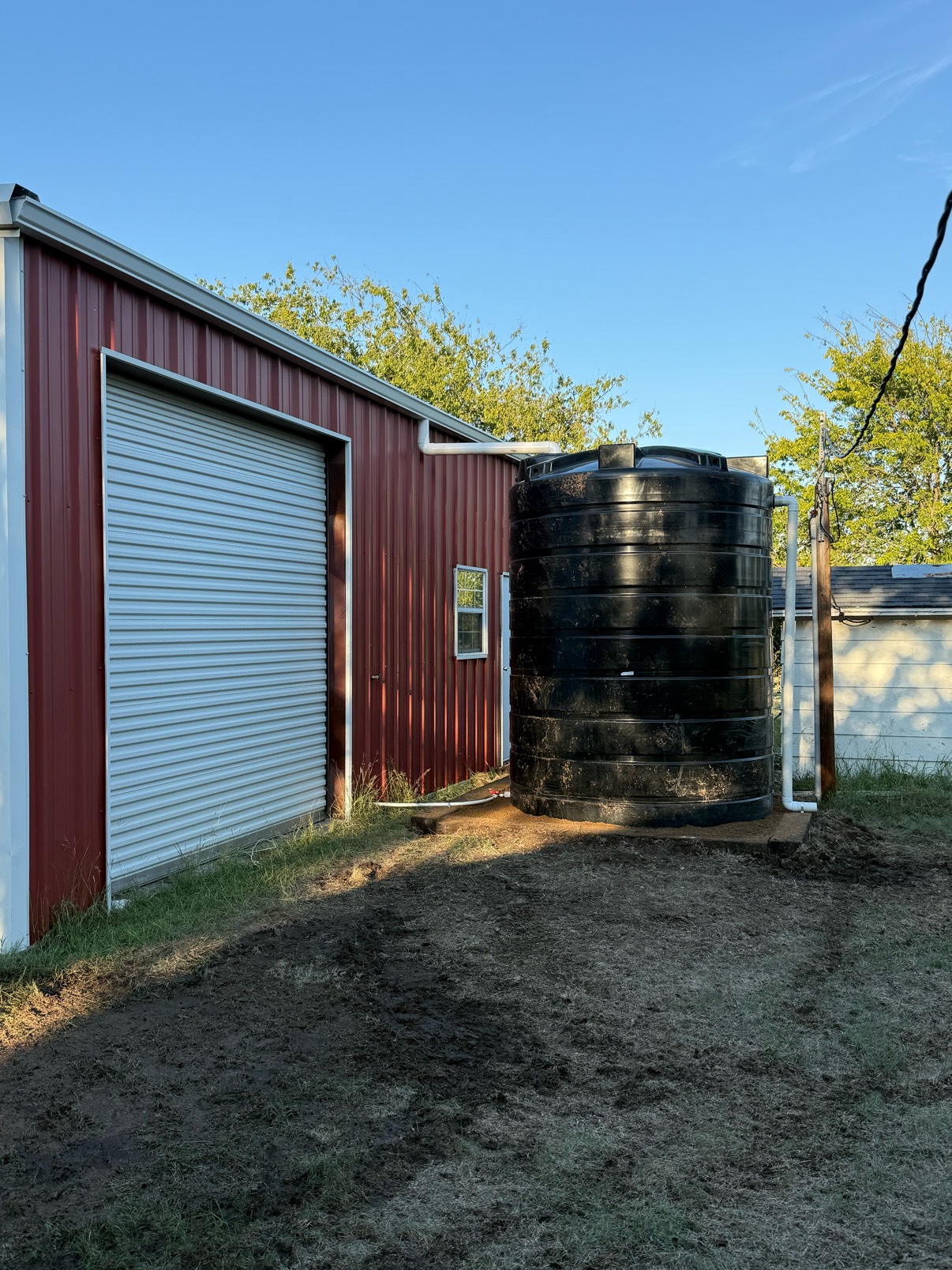
Calculate Your Roof’s Rainwater Collection Potential
The amount of water you can collect depends directly on your roof’s footprint, not its slope.
As a general rule, 1 inch of rain on 1,000 square feet of roof yields roughly 620 gallons of water.
Simple Rainwater Harvest Formula
Annual Yield (Gallons) = Roof Area (sq. ft.) × Annual Rainfall (inches) × 0.62
For example, a 2,000 sq. ft. home in a region receiving 32 inches of annual rain can capture around 39,680 gallons per year.
Factor in Central Texas Rainfall Patterns
While roof footprint can give you an idea of your maximum potential harvest, your local weather determines your actual tank size requirements. Central Texas weather rarely provides steady, predictable rainfall, and many of us are used to long dry periods that are broken up by sudden heavy rainstorms.
A tank that looks adequate on paper can still run dry in July or August. For irrigation, it makes more sense to think about how many gallons you use between meaningful rainfall events rather than relying only on the property’s annual rainfall total.
Determine Your Property’s Water Usage
Your ideal rainwater collection capacity depends on what you plan to do with the water:
- Garden and Landscaping Irrigation: Supplemental garden watering requires moderate storage capacity.
- Lawn Watering: Maintaining turfgrass through summer droughts requires larger storage setups.
- Livestock and Agriculture: Farms and ranches need large, consistent reserves to supply trough systems year-round.
- Household Auxiliaries: Flushing toilets or washing clothes uses steady volumes of water every single week.
Higher water demand requires larger rainwater collection tanks to stay ahead of periods without precipitation.
Sizing Chart: Recommended Tank Sizes
| Property Type | Primary Water Use | Suggested Tank Size |
| Urban Residential | Garden beds, potted plants | 500 – 1,500 Gallons |
| Suburban Property | Lawn maintenance, landscape beds | 2,500 – 5,000 Gallons |
| Rural Acreage / Farm | Livestock, full irrigation | 10,000+ Gallons |
Other Factors to Consider Before Buying
Calculating volume is just the first step. Before selecting rainwater harvesting tanks, keep these installation factors in mind:
- Placement Space: Ensure you have flat ground space for above-ground tanks or a clear area for underground excavation.
- Gutters and Downspouts: High-volume capture requires seamless, well-maintained gutters and robust downspouts to direct flow efficiently.
- Filtration: Add proper leaf screens or guards to keep debris out of your holding tanks.
- Modular Storage: Connecting multiple smaller tanks often works better for tight yards than installing one massive vessel.
Expert Rainwater Harvesting Services in Central Texas
Our team at Aqua Werx installs complete gutter systems and rainwater storage solutions tailored to your property’s needs.
With over a decade of experience, we serve property owners across Central Texas, including Waco, Woodway, Hewitt, Robinson, China Spring, Lorena, McGregor, Crawford, Bellmead, Temple, and Belton.
Contact us today to get a personalized quote for your rainwater collection project.
Frequently Asked Questions
1. Can a rainwater tank be too large?
Yes. An oversized tank costs significantly more to purchase and install. If your catchment area or local rainfall cannot fill it, that extra capacity goes unused.
2. What size tank do I need to water a garden?
For a typical suburban garden in Texas, a system holding 1,000 to 2,500 gallons provides a solid buffer during summer dry spells.